
 By
By The Federal Reserve is increasingly expected to raise interest rates by 25 basis points on Wednesday, after hotter-than-expected inflation and higher energy prices forced markets to rethink the path for monetary policy.
Goldman Sachs, J.P. Morgan, HSBC and Deutsche Bank are among major banks forecasting a hike at the Federal Open Market Committee’s September 15-16 meeting.
CME FedWatch puts the probability of a quarter-point hike at about 90%.
That leaves little suspense around the policy move itself. The bigger question for investors is what comes next.
A hike accompanied by hawkish guidance could put upward pressure on Treasury yields and the dollar, while weighing on rate-sensitive stocks.
But some market strategists argue that a well-telegraphed move could instead reduce uncertainty, stabilize bonds and leave equities supported by strong corporate earnings and investment.
The latest shift toward tighter policy follows stronger US consumer and producer inflation readings for August and a renewed increase in oil prices amid tensions in the Middle East.
“Lack of inflation progress has tipped the balance,” HSBC economist Ryan Wang said in a note, backing a September rate hike.
J.P. Morgan economists led by Michael Feroli also turned more hawkish after the latest data, saying rising bond yields, higher energy prices and firm inflation readings made a September hike “more likely than not.”
The change marks a sharp turnaround from earlier in the year, when many economists expected the Fed to remain on hold after keeping rates unchanged through 2026 following a quarter-point cut in December 2025.
Inflation and oil are driving the Fed debate
David Russell, Global Head of Market Strategy at TradeStation Group, said energy and tariff-related price pressures are increasingly important drivers of interest rates.
Higher diesel means higher prices for many goods and services. Last week’s PPI report already showed inflation spreading from fuel, and that is likely to spread as businesses raise prices to cover costs. An inflationary cycle is taking hold. Bigger forces are leading, and the Fed is following.
That creates a difficult backdrop for policymakers.
Even if the Fed raises rates as expected, investors will be looking for evidence that officials believe inflation is moving back toward the central bank’s 2% target quickly enough.
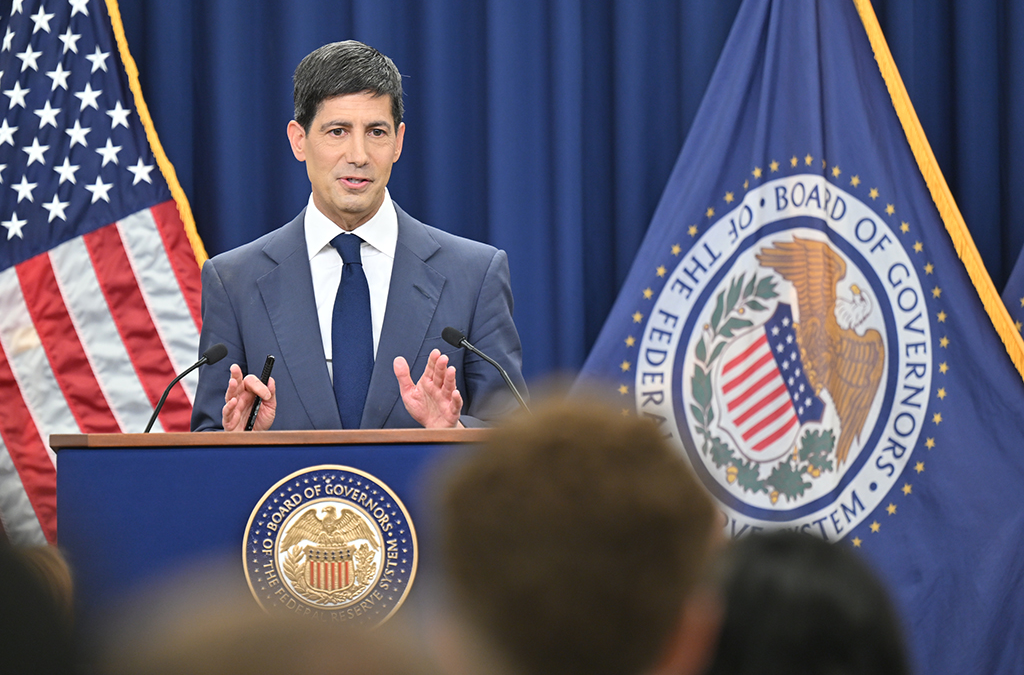
Russell expects Kevin Warsh to reinforce the hawkish message heading into the decision.
“Kevin Warsh has laid the groundwork for a rate hike with hawkish rhetoric, and investors expect him to deliver,” Russell told Invezz.
“The market will anticipate more stern messaging and higher inflation estimates in the SEP. The dot plot might be less important given fast-moving events in the Middle East and Warsh’s own skepticism toward forward guidance.”
The Summary of Economic Projections could become an important market signal, particularly if policymakers raise their inflation assumptions or show wider support for keeping rates higher.
Treasury market may matter more than the hike
The bond market could provide an important signal of how investors interpret the decision.
The 10-year Treasury yield briefly moved above 5% on Tuesday, reaching 5.041%, its highest level since 2007.
JP Morgan has argued that the rise in long-term yields is no longer simply a Federal Reserve story.
Since the July FOMC meeting, the biggest contributor to higher Treasury yields has been a rise in the term premium, followed by robust economic activity, while the bank said more hawkish monetary policy had not been a meaningful driver.
Energy prices are adding to that pressure.
J.P. Morgan said Brent crude has risen about 13% since the July meeting, while diesel and jet fuel have risen 50% and 60%, respectively.
That makes the reaction at the long end of the Treasury curve especially important.
In a September 11 Goldman Sachs discussion, Jonathan Shugar, head of cross-asset sales, described the back end of the rate curve as one of the largest market risks, citing global fiscal deficits and heavy AI investment.
Shugar said Goldman analysts estimate hyperscaler capital expenditure at about $800 billion this year and $1.2 trillion next year.
He added that equities can tolerate higher rates, but “it’s really just the pace of change that has the biggest impact.”
That is an important distinction heading into Wednesday.
A modest increase in short-term rates that is already priced into markets may have limited impact on stocks.
A fresh jump in long-term yields, however, could put more pressure on valuations.
Equities face competing signals from rates and growth
The expected equity reaction is far from unanimous.
Brian Allen, Chief Investment Officer at C.S. McKee, said the market impact of a rate hike would depend on the Fed maintaining a hawkish tone and showing broader committee support for higher rates.
“A rate hike this year is necessary, but its credibility and impact depend on the Fed Chair maintaining a hawkish tone and the revised Summary of Economic Projections (SEP) showing broader committee support for higher rates,” Allen told Invezz.
He expects that combination to stabilize and flatten the yield curve, modestly lower longer-maturity bond yields and mortgage rates, support the US dollar and slow Treasury sales by foreign investors and central banks.
Allen also expects US equities to rally on the news, with small-cap and large-growth stocks performing particularly well.
That view is consistent with a broader argument that markets could absorb higher policy rates if economic growth and corporate investment remain resilient.
UBS said the market reaction to a Fed hike would depend heavily on the economic backdrop.
In a September 14 note, UBS said Fed hikes alone do not undermine equity fundamentals, and that resilient growth and earnings should continue to support stocks, even as tighter policy contributes to volatility.
“Historical market data show that Fed hikes typically become a concern for stocks only when economic growth begins to falter,” the UBS analysts said.
Retail traders could add to post-Fed volatility
Stephen Callahan, Trading Behavior Analyst at Firstrade, expects the Fed decision to produce another form of market volatility as retail investors respond to the first rate increase in three years.
“The big thing to watch following the Fed’s decision is how retail traders will react to the first rate increase in three years,” Callahan said.
If Warsh's tone Wednesday echoes his hawkish Jackson Hole speech, we could see elevated trading volume and volatility carry into the back half of the week as retail portfolios get repositioned, especially as many are still leaning heavily into this year's AI-driven rally.
Callahan said retail engagement typically rises during major policy events, with more logins, more trades per active user and shorter holding periods as investors respond to the initial headline.
One hike or the start of a longer cycle?
Carl Tannenbaum, Chief Economist at Northern Trust, expects the Fed to raise rates by 25 basis points, arguing that the move would reinforce its commitment to price stability.
“The ‘right’ decision from the Fed is far from obvious, and debate is likely to be vigorous,” Tannenbaum told Invezz.
“Chairman Warsh wanted a ‘good family fight’ on the Committee, and whatever the outcome, I expect at least some dissenting votes.”
Tannenbaum said Warsh needs to maintain credibility early in his tenure, while a rate increase would reinforce the FOMC’s commitment to price stability.
But he also raised the question that markets will confront after Wednesday: whether one increase is enough.
“If bond yields stabilize as investors regain confidence, a single move could be sufficient,” Tannenbaum said.
That question is central to pricing across markets. CME FedWatch already showed investors pricing a high probability of another increase later this year.
Additional rate increases would remain important for the outlook for the front end of the Treasury curve and other interest-rate-sensitive assets.
At the same time, the long end may continue to respond to forces beyond the Fed’s direct control, including fiscal concerns, energy prices and hyperscaler issuance.
Goldman’s Shugar made that point in his discussion, saying the press conference would be more consequential than the hike itself if policymakers deliver the expected move.
For investors, Wednesday’s decision therefore comes down to more than 25 basis points.
The key signals will be the SEP’s inflation and rate projections, how firmly Warsh addresses persistent inflation, and how the bond market responds to the Fed’s guidance on the path ahead.
Those signals will shape the market reaction across Treasury yields, the dollar, and equities, with AI and other rate-sensitive stocks remaining in focus as borrowing costs adjust.
The post Why today’s Fed hike may matter less than what happens to the yield curve appeared first on Invezz
